
Expert Recommendations On Nuclear Waste May Fall On Deaf Ears – Yet Again

The process of siting a permanent nuclear waste repository has moved at a pace comparable to plutonium decay. To help advance the nation’s nuclear waste strategy, the United States Nuclear Waste Technical Review Board (NWTRB) issued six overarching recommendations for improving the Department of Energy’s nuclear waste management program.
Flawed Bill Purported to be a Waste Ban

This legislation would have not added the protections needed to prevent a high level radioactive waste ban in Texas,” Craddick wrote in a statement saying he “killed” Landgraf’s bill. “Walking back on a promise to the Permian Basin is not an option.
Texas GOP Disapproves of Landgraf’s Nuclear Waste Solution

Craddick earlier in the session sent a letter to the Environmental Regulation Committee that stated the bill “muddies the waters between a tax cut for a specific vendor and the issue of high-level radioactive waste storage in Texas.” Taylor spoke in opposition of the bill before it was voted out of committee, 6-2.
What Happens If HB 2692 Passes in the Texas Legislature?

If HB 2692 passes the Legislature, Waste Control Specialists will get a huge tax cut, reduce its costs by reducing safety standards and – if a provision in the bill to ban highly toxic nuclear waste is struck down in court and a federal license to store the waste is granted – a new revenue stream. That highly toxic waste will be shipped from around the country on Texas highways to Waste Control’s facility.
Why Texas Lawmakers Want To Ban Radioactive Waste
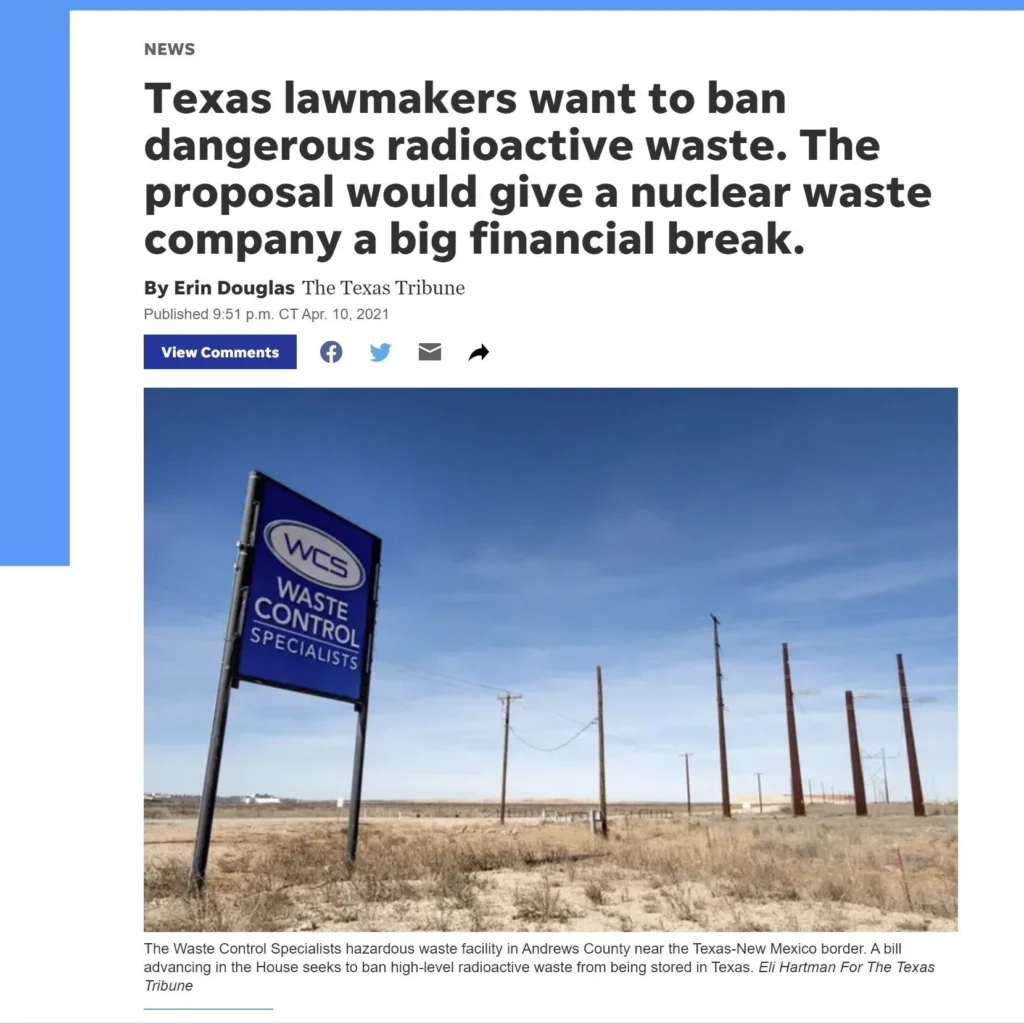
The plan faces stiff opposition from Gov. Greg Abbott, some oil companies that operate in the region and environmentalists over concerns about the risk of groundwater contamination and transportation accidents. Abbott wrote to federal regulators last year asking them to deny the license application, stating that the proposal presents a “greater radiological risk than Texas is prepared to allow.
Nuclear Waste Barrel Prompts Investigation After Sparks Fly

Flawed packing of radioactive waste caused sparks to fly from a container at Los Alamos National Laboratory, prompting evacuation of the work area and later the underground disposal site near Carlsbad where two similarly packed canisters were stored.
Why a Proposed NM Nuclear Waste Storage Facility is Illegal

The federal government has said in law that this spent fuel, this irradiated fuel from nuclear power plants, is highly toxic and highly dangerous, and its permanent disposal requires it to be disposed deep underground in stable geologic formations, so that’s the law,” he said. “This facility is none of that.
The Permian Basin Is Not a Good Area To Store Nuclear Waste
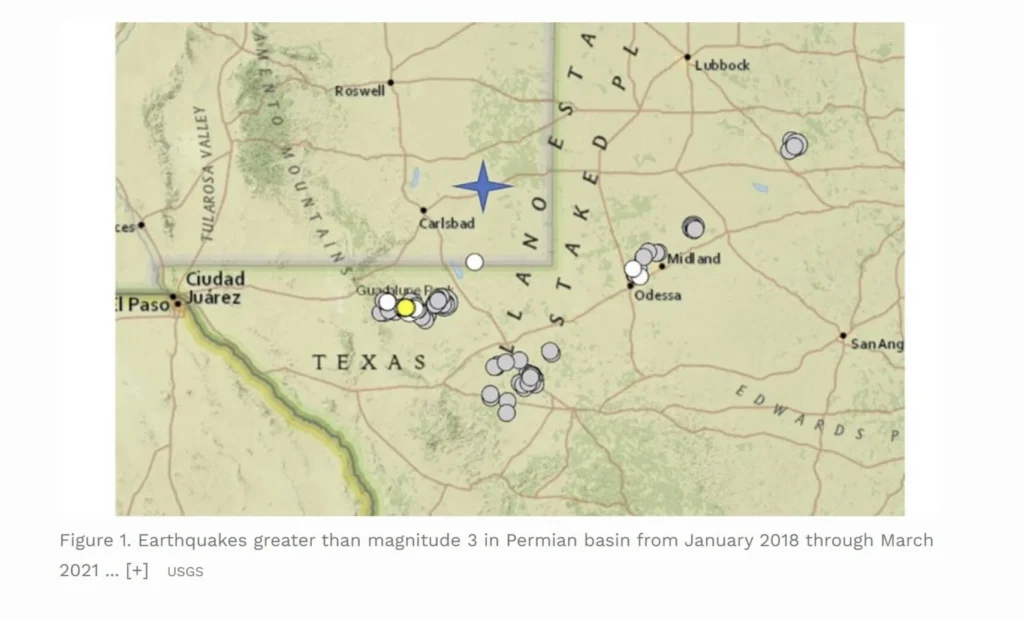
A swarm of earthquakes that appears fairly suddenly adds to the uncertainty of predicting the safety of a proposed nuclear waste storage in an oil and gas field, especially a giant field like the prolific Delaware basin in New Mexico.
DOE Nuke Chiefs: There is Lack of Urgency on Nuclear Storage

Locating a permanent repository for nuclear waste is “not a crisis” and the government should be deliberate about community engagement throughout the process, a former Department of Energy nuclear leaders said during a discussion last week.
DOE Carlsbad Stops Los Alamos NNSA Shipments to WIPP
An evacuation occurred Feb. 26 at the waste generator site around the gloveboxes at Los Alamos Technical Area-55 Plutonium Facility after sparks flew in a 55-gallon drum that was being packed for shipment to the Waste Isolation Pilot Plant (WIPP), according to a Los Alamos-NNSA “five-day report” dated March 12. Personnel observed sparking after a “metal waste item” was placed into the drum and contacted two high-efficiency particulate air (HIPA) filters.