
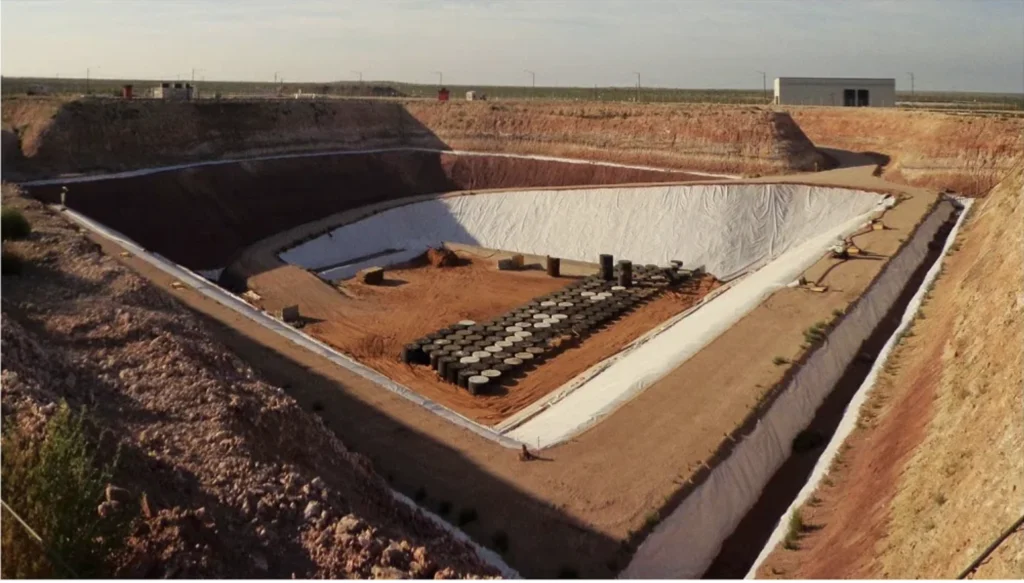
Federal regulators are considering allowing WCS in Andrews County to accept high-level nuclear waste. The facility already handles low level nuclear waste, a very different level of radioactive material.
High-level nuclear waste, or spent nuclear fuel, is stacking up at nuclear reactor sites across the United States. Unfortunately, the federal government has come up empty handed when it comes to solving the massive, dangerous problem. In 2015, Texas asked the federal government if they could change the law allowing Texas to accept greater than Class C waste.
The Nuclear Regulatory Commission created a draft regulatory basis that outlines how states can take in federally regulated high-level nuclear waste. Instead of a deep geological repository, the greater than Class C waste might end up in West Texas and Southeastern New Mexico. Even the Governor of Texas, Greg Abbot, opposes the plan.